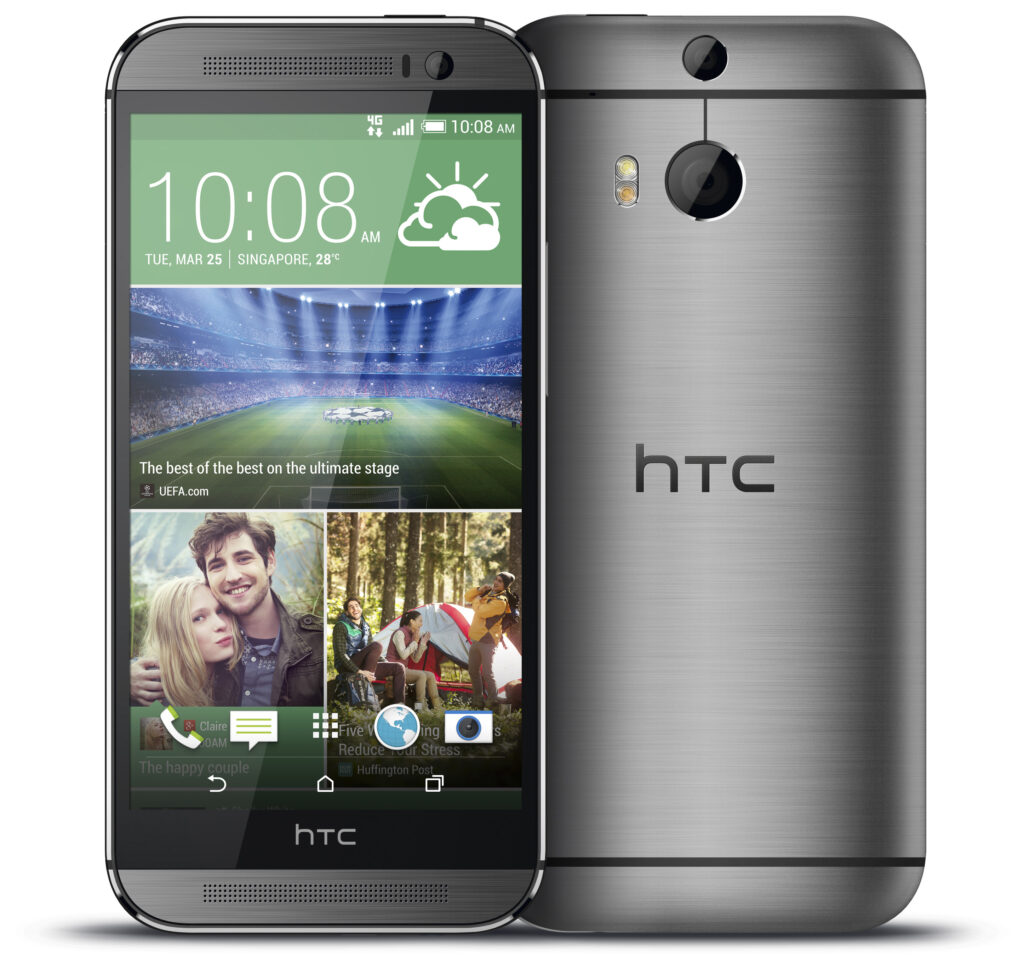
The HTC One M8 was another one of my few near perfect devices I’ve owned. I loved everything about it for the time I owned it.
The design and build was fantastic. The whole frame was a curved metal with the device being really thin and comfortable to hold yet sturdy. The only trade off to this brilliant design was the omission of a removable battery.
It’s camera setup was controversial at the time, as it only had a 4MP main camera with a 4MP depth sensor. HTC claimed their “Ultra Pixel” technology was the next big thing. I’m not sure about that, but the photos the camera produced were fine and being able to adjust the focus after the shot was taken was a nice feature.
When released this phone shipped with Android 4.4.2, and throughout it’s life got upgraded to Android 6. However the community around this phone was massive. It got official LineageOS support which took it all the way up to Android 10.
Once I’d finished my contract on this phone I moved into the period of combining my work phone and my personal phone (wouldn’t recommend this in any situation, however at the time I was practically forced into it) so didn’t pay for a phone for quite a while after this.
This phone continued it’s life for another few years after my ownership. With LineageOS continuing support for this device it was passed on to my Grandfather, who returned it back to me after his usage. By this point the battery was heavily degraded, and repairs weren’t easy on this device. I flashed the latest version of LineageOS and sold it on the used market. If you look now the HTC One M8 sells for very little money, but going back to around 2020 it still fetched around £100 used!
If you wanted a very cheap device, with lots of extra features and custom ROM support the HTC One M8 was a brilliant option at the time, and would still be a fun device for playing around with today.
Unfortunately HTC as we knew it is long gone, however I just had a look for their website and they currently have just 1 new smartphone for sale. I would love to see them make a comeback, our brand choices for smartphones in 2025 is getting more and more limited. Let’s take a moment for the fallen brands; Nokia, Blackberry, LG, Siemens, NEC, BenQ, Palm, Sagem and of course HTC.
The Galaxy S3 was a device of quite a few “firsts” for me. It was the first device I ever got on a contract, being an expensive device and being on a low wage in my first job in 2012 I would’ve struggled to buy it outright. It was also the first flagship phone I ever owned, a trend that carried on from this uninterrupted for almost a decade.
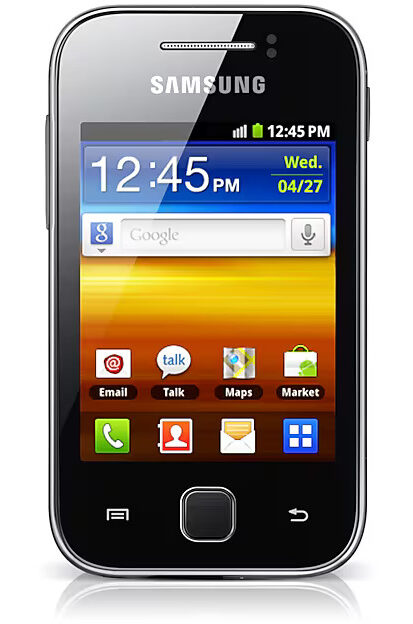
Functionally it was another big leap from the Galaxy Y and although that was only a budget device the technological leap between two devices released only a year apart was huge.
This phone had a beautiful high resolution, AMOLED screen that still looks great to this day (I own this device again so I can still see it!). The screen and overall device was much bigger than the 3 inch device I was coming from, and yet it was still slimmer.
I consider devices from this time period up until around 2019 a golden era for Smartphones. Manufacturers were cramming everything they could into their phones, and trying new features in every generation. They couldn’t yet rely on their brand name and image alone yet so they actually had to put some effort in. We still had removable batteries, we had headphone jacks and SD card slots and still managed to have sleek devices.
This was around the time I discovered how Samsung short change their European customers. Apart from a couple of exceptions (2023 and 2025) customers in Europe, and most locations outside of the US get devices with Samsung’s in house “Exynos” chipsets. They use these chipsets in all of their products from smart TV’s to their Fridges. This maximises profit margins for them as they don’t have to pay out to Qualcomm or Mediatek. This would be acceptable if it weren’t for the fact the US customers get a better deal. They get Qualcomm’s Snapdragon chipsets in all of their S series devices. Not only are the Exynos chipsets inferior (with notorious poor performance, overheating and worse battery life), developers only really focus on the Snapdragon versions of the phone. As someone who was still really keen on custom ROMs and customisation this was extremely disheartening to discover after I’d made my purchase. I could see hundreds of fantastic ROMs available but they weren’t compatible with my device. I am quite vocal about my disdain for this practice and after having suffered these devices a couple more times leading up to the current day I’ve vowed never to buy Samsung again. However that’s a story for another day.
Other than that I owned this device for nearly the entirety of the 2 year contract. I was very happy with it for the most part. The camera took great photos, I no longer had storage and limited RAM issues and the phone just worked. I liked it that much I even bought one of those bulky Otterbox cases to keep it safe. Battery life was still an issue on phones like this though, and at only 2600Mah capacity with an Exynos chipset draining it things were never great. I had an extended battery for this phone, with a bulkier back cover that remedied the issue. However it meant I couldn’t use a protective case as none would fit.
At some point I dropped the phone and cracked the screen. It was a small singular line and nowadays I’d probably just leave it be until it got to the point I couldn’t avoid repairing it. At the time though I was a fresh faced young man just getting my feet into the IT industry. Being naive and overly keen I decided I could get away with just replacing the glass (Even today I wouldn’t attempt a repair like this, with much more knowledge and equipment). Armed with a replacement top layer glass piece, some UV resin and a pen knife I attempted the repair (this feels ridiculous even typing it 13 years later). Needless to say I never got as far as even getting the old glass off before I’d caused irreparable damage.
The S3 met it’s untimely demise at my hands, and that meant it was time for a new phone!
I don’t remember what lead me to purchase this phone, whether anything went wrong with the Chat 335 or if I just fancied something new. But this would’ve been the 2nd big jump in mobile technology I’d experienced. The first being the Nokia 3210 to the Nokia 3200.
I now had an Android device, albeit a very basic, budget one but I had proper connectivity, access to the “Market” which would later become the play store and the customisation options that come with the Android operating system.
I owned this device whilst I was completing my IT apprenticeship after college, and at the time I had a particularly annoying commute between home and the apprenticeship centre. It involved a 10 minute walk, a 30 minute train and another 20 minute walk. On the way there this was manageable and took an hour but on the way home the time we finished for the day and the train times didn’t coincide, so I’d often be left waiting at the train station for 40 minutes to an hour. I’d charge up the phone before I left and then play games on it solidly through my wait and train journey. On a bad day the battery would be flat before I got home. I still have memories of playing “Dragon! Fly” and early builds of “Hill Climb Racing” on this little thing. While this phone was no powerhouse when it came to specs it worked OK, the capacitive touch screen, while still plastic was responsive to input rather than the resistive hell of the Tocco Lite. I certainly used it to its limits and beyond.
Strangely I remember this being the first phone I ever purchased a case for. I had recently joined eBay and found a cheap, red silicone case for it. I don’t recall too many other people using cases around this time but I remember thinking it needed some protection. Most likely because of the dreadful wage we were given on our apprenticeship I’d have had no chance of affording a replacement!
This is another phone I’ve re-purchased since it’s practically worthless now and it just reiterates to me how far technology has come in the 14 years after this device’s release. This phone has a single core 830mhz processor, 384MB RAM and a measly 512MB of internal storage (Thankfully it had a Micro SD card slot and I remember rooting this device to be able to install apps on the SD card). It has a 3 inch screen with a 320×240 resolution. The last Android version it officially received was 2.3.6. We now have phones with 10 times the resolution, 2000 times the storage and more processing power and RAM than the best gaming machines and servers of the time. However all this has come at a cost. This phone has a removable battery, expandable storage and a headphone jack. None of which is commonplace today. Testament to the build quality of these devices this one still holds a charge on it’s original battery, and if I put a SIM card in it can still connect to the network and use mobile data, it connects to my modern WiFi. Obviously not much else works, the web browser is too outdated to load anything other than Google, it can’t connect to the app store and I can’t sign into my accounts. These are all software limitations though. This device still functions just as well as it did when it was new, and had it’s OS updates not been abandoned and API levels of apps not been increased this would still be a functional (although limited and slow) device today.
Considering this was my first true smartphone it didn’t take long before I started to tinker. It spent a year as my primary device where aside from rooting to uninstall some unneeded software and transfer apps to the SD card it was left untouched. Once I no longer relied on it as I phone I began learning about custom ROMs, installing Cyanogenmod and various other ROMS I could find. I began tweaking the Android operating system to slim it down as much as I could to ease the pressure on its limited resources.
The last duties I remember this phone having were as a seed box for torrents. It had files stored on the SD card, living permanently on charge connected to WiFi. It managed this quite well, often going weeks or months with no interaction from me. I’m not sure what happened to the little Galaxy Y after that, being so small maybe it was lost! I’m glad to have another in my nostalgic collection, even if it was basic and underpowered even for it’s time it will always be my first smartphone.
Look at the specifications of any midrange or flagship smartphone today and I can guarantee with a degree of certainty that it will have an OLED screen. Look at the budget segment of the smartphone market and all but a couple of exceptions will have LCD screens. It wouldn’t be a stretch then to assume that an OLED is the premium option, which it is but would it also be correct to assume it’s the better option? Lets delve in.
OLED benefits
An OLED (or Organic Light Emitting Diode) screen is the newer technology that many of today’s more premium phones are equipped with. They have unmatched contrast, in part due to the design of these screens in that there is no backlight, each pixel is individually lit and can be turned off entirely to create a much darker black. They consume less power, again due to the individual LED’s being able to turn off (a big driving factor for “Dark mode”). They have excellent colour accuracy. They can have very fast response times due to the speed the LED’s can change state. OLED screens can be flexible, create the market of folding smartphones we’ve seen over the last few years.
OLED Drawbacks
The cost to produce an OLED panel is high, due to the organic compounds in the OLED’s having a short shelf life and a complex manufacturing process. Over extended use the OLED’s luminance, or ability to produce light decreases. This leads to a problem we refer to as “Burn in”. When these OLED panels display a static image for extended period of time they get dimmer, whilst the other OLED’s around it that were not left in that state keep their brightness, leading to a shadow of the image being permanently on the panel. On phones this commonly occurs on the status bar, or home screen. PWM (Pulse Width Modulation) is the method in which an OLED panel controls its brightness. An OLED is either in an on or off state, there is no in between. Therefore to appear dimmer the OLED will turn on and off hundreds of times a second to trick our brains into seeing a less bright image. Some people can perceive this flicker and it causes them headaches and eye strain in a term that’s now commonly referred to as “PWM Sensitivity”. Durability is also a concern with OLED panels, depending on the quality used they can be quite susceptible to impact damage and deterioration over time.
LCD Benefits
An LCD (or Liquid Crystal Display) is a more mature technology used in everything from digital watches and train departure boards to TV’s, computer monitors and mobile phones. It’s more complex in how it works compared to OLED with it’s RGB LED’s, but essentially there is a backlight which shines through colour filters to create an image. They are cheaper to manufacture because the manufacturing process is simpler and uses readily available materials. They are not susceptible to burn in. They do not have issues with PWM due to the fact the backlight brightness can be directly adjusted by simply lowering or increasing the voltage. LCD’s can achieve a higher peak brightness due to the backlight technology. LCD panels also generally have a very long lifespan.
LCD Drawbacks
On higher brightness settings LCD panels can draw a lot of power due to the backlight. Also due to the backlight the contrast between black and white is limited, this varies by quality of the LCD used. LCD’s can also have poor response times, again this varies by quality of panel and isn’t as prominent in modern LCD displays but essentially the light filters cannot respond fast enough to the input they receive and a “ghost” image can be displayed for a fraction of a second but enough to be perceivable.
Which is best for a smartphone then?
That was a lot of information, but its important when making a comparison to have all the facts. How do we go about comparing both of these technologies just for the application in a smartphone? We have to bring real use cases and user requirements into it. We also have to appreciate that not all LCD and OLED panels are created equal. There is a vast difference in quality between the best and worse panels for each of these technologies.
There are extreme ends of the user spectrum here for which the decision will be very easy: For a user with PWM sensitivity, or someone who needs to display static images for an extended of period of time they need a phone with an LCD screen. For a user playing high intensity games, or a professional photographer demanding colour accuracy they need an OLED screen.
A couple of niche features OLED panels can provide may also sway your decision too. If you need an always on display or want the deepest blacks when using dark mode, only an OLED can provide that.
Personally I fall into the category of LCD being a better choice for me. While I don’t get headaches or eye strain from an OLED screen I can detect the flicker, especially in my peripheral vision which can get annoying. I also keep my screen timeout set at 10 minutes, and often display text or an image for reference while I’m working on something, so not having to worry about burn in is a plus. I also appreciate the lower cost, my current personal phone (HMD Pulse) cost me just £60 new and sealed, whereas my work phone (CMF Phone 1) cost £165, and aside from the OLED and faster chipset it’s missing features that the HMD Pulse has. The cost of replacement is also a benefit to me too, it’s reassuring to know that if I break the screen I can replace it for £15 delivered whereas on some of the premium flagship phones a replacement OLED panel can be £200-300 just for the part, considering most users can’t fit a screen themselves it becomes worryingly expensive.
What should the average user do then? Assuming you don’t have any of the specific requirements I’ve mentioned above. In reality you don’t have much choice. In today’s market as I mentioned in the first paragraph budget phones get LCD panels and more expensive phones get an OLED panel. Unfortunately it seems this trend is only increasing and in some cases budget phones such as the CMF Phone 1 and Samsung A15 and A16 have now got OLED screens.
In an ideal world I’d like to see customers presented with a choice: The same phone with the only difference being a choice of an LCD or an OLED. Even more optimistically the LCD variant would be slightly cheaper too, passing on the reduced manufacturing cost. An LCD is arguably the best choice for most people, and the environment. It only takes a quick search on 2nd hand online marketplaces to see thousands of phones being sold as spares and repairs due to OLED burn in and broken panels.
How many of these phones would still be in use if they didn’t have this fault, and if when broken the screen could have been replaced cheaply? In a room of average people none of them would be able to discern or tell you the difference between a quality LCD and an OLED, it seems like the ingenious marketing departments of the smartphone companies have struck again.
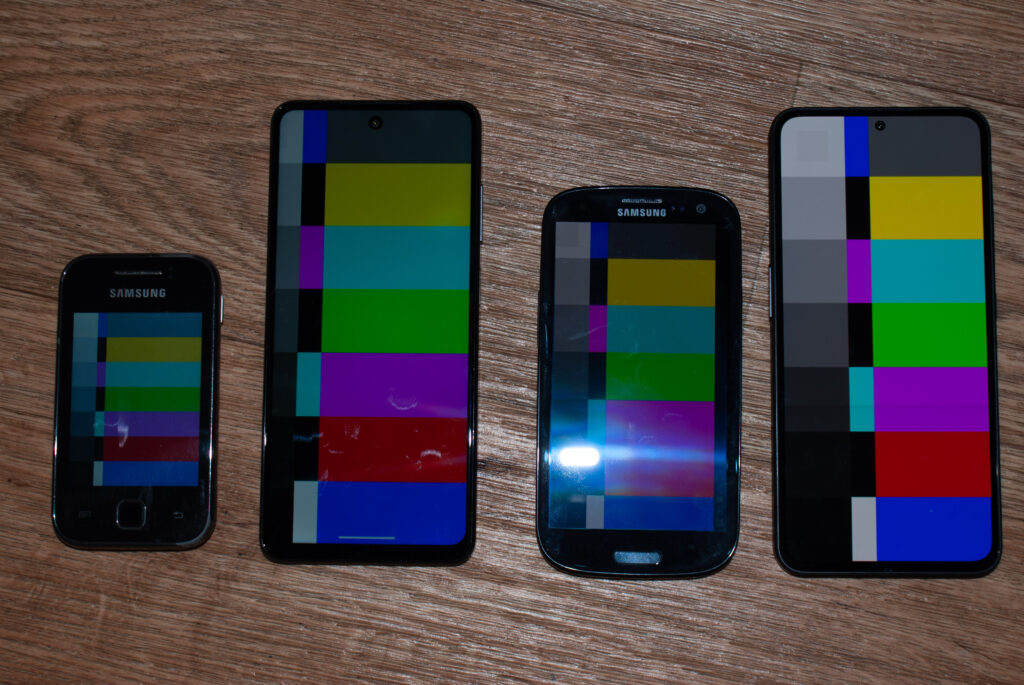
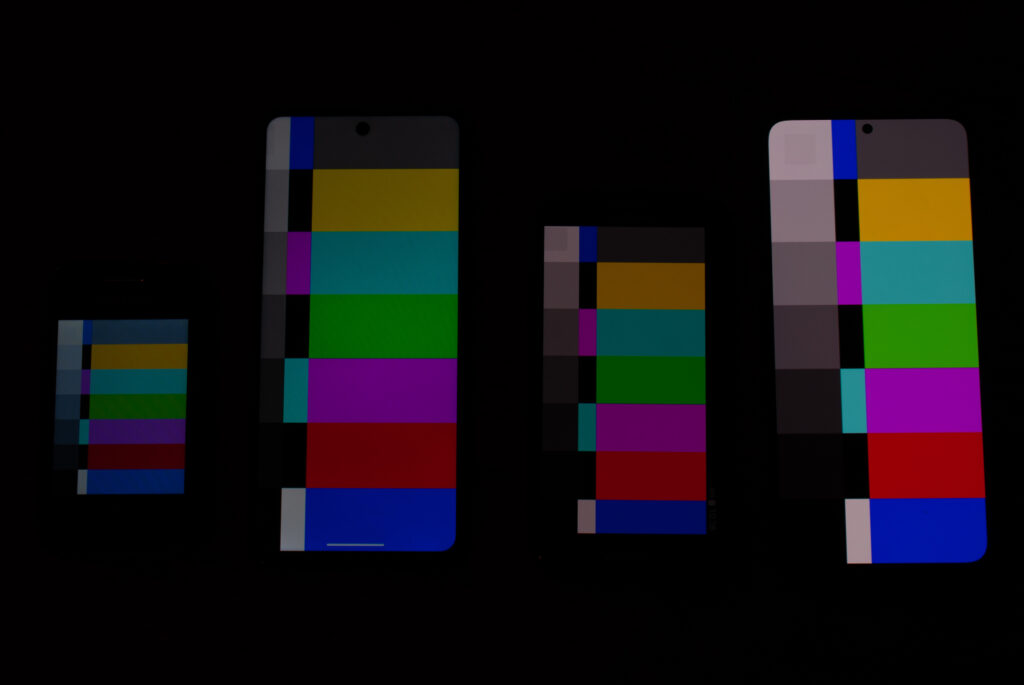
Below I’ve taken two photos of four phones displaying the same image at maximum brightness.
From left to right we have a Samsung Galaxy Y (2011, TFT LCD), HMD Pulse (2024, IPS LCD), Samsung Galaxy S3 (2012, Super AMOLED), CMF Phone 1 (2024, AMOLED).
As you can see there are differences here, and in particular the older devices have lower max brightness levels. However even in the case of the 2011 Galaxy Y other than its miniscule size you can’t look at the display and say it looks awful. On the newer phones the bezels are smaller and the screens are much bigger but the difference between the two is marginal and these two aren’t even close to being equal. The Pulse has a PPI (Pixels per inch) of 265, whereas the CMF Phone 1 has 395.
What I’m getting at here is that specs on paper can look like a night and day difference but in reality the differences are barely noticeable. Buy what works for you best and don’t get sucked into marketing tactics!
There was actually another device in-between this one and the Tocco Lite. It was a Nokia X3-02, and on paper it should’ve been better than this one. However there was a problem with it not being able to connect to WiFi and another issue I can’t remember that meant it had to be returned, because I only had it for around a week I’m not going to do a full post for it.
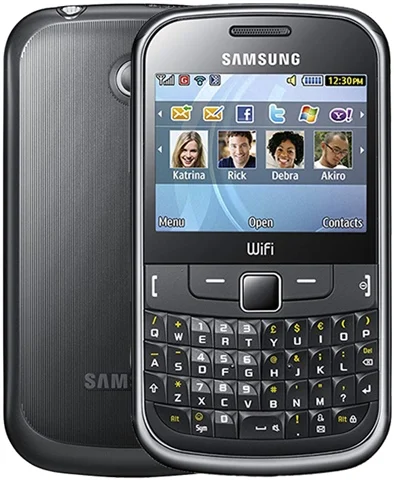
Onto the Samsung S3350 AKA Chat 335. I used this phone throughout my time at College. Aside from the key feature that it was actually possible to type on unlike the Tocco Lite this had one notable, major improvement on it. WiFi. No longer was I limited by my minimal credit, when I was somewhere with WiFi (admittedly not too many public places had this yet) I could browse Facebook or the web.
You only need to take one look at the picture above to see that this phone is a blatant Blackberry knock off. 2010 was a strange time for the mobile phone market. On one hand you had the iPhone 4, the Galaxy S and the Nexus One whilst on the other hand Blackberry still had a large market share and people were still buying feature phones like the Chat 335 and Nokia devices running Symbian. We were not yet in a world where a smartphone was a requirement, mobile banking wasn’t an option, mobile data prices were still high and the height of portability for me was a laptop. For one I wouldn’t have been able to afford a smartphone and it simply wasn’t a requirement for me.
This phone was still annoying enough that you wouldn’t want to use it unless you really needed to. I think I may have used the inbuilt internet browser a couple of times, and most of the time you were met with the dreaded “Out of memory” message when trying to load a page. It did however have a micro SD card slot and a 3.5mm headphone jack so it got plenty of use as a media device. I also got quite good at texting with the full keyboard, although I remember occasionally using my girlfriend at the time’s Blackberry and that was worlds ahead of the Chat 335 in terms of quality and functionality.
Without any comparison this was a decidedly budget and basic device. I actually recently re-purchased this device to revisit so I can review it without memories clouding my judgement. It has a capacitive home button, which allows you to scroll around the menus. This is overly sensitive and doesn’t work well at all. The keyboard often doesn’t register a button press, which compounds the issue with the inaccurate scrolling button when you try to correct it. It lacks a reasonable amount of RAM to load any website beyond Google. The camera was poor, even for the time. On the flip side, just using it as a feature phone and not expecting it to be a smartphone it’s OK. The keyboard is still better than the best T9 keyboard, or a resistive touch screen. Despite being small the display is clear and readable. The battery lasts a long time and the device is very durable.
While this phone would never have won any awards even back in 2010 it was an acceptable device. It kept me in contact with friends and family, and kept me occupied through moments of boredom. This was my last feature phone before I moved onto a smartphone! Aside from where I’ve done digital detoxes and used a “Dumbphone” from here on out it’s all Android and iOS devices from here on.
This was my first phone that had a touch screen, and it was purchased as a replacement to the W300i.
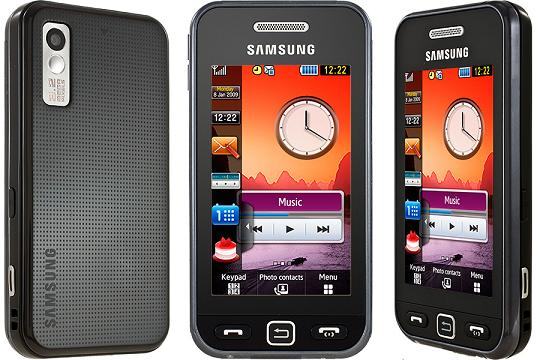
This phone was my introduction to Samsung devices and it runs TouchWiz 1.0. This was the basis of One UI which is now on version 7 on Android 15. Technically this is where it all began. Launched in 2009 this phone was a budget phone, on a proprietary operating system. It has a resistive touch screen and no physical keyboard. In some ways it looks very familiar to the smartphones we know. However don’t be fooled, this is very much a feature phone with a touch screen. The operating system was very limited, with no method to install any apps other than what it shipped with. You could however set up your homescreen with widgets for the first time, although it’s uses were limited.
My only real fond memory of this phone was the camera and MP3 player. There was still no 3.5mm headphone jack to be seen on this device, but it had the option to expand the storage with a Micro SD card, offering at the time seemingly limitless storage. The camera was much better than the VGA camera I was used to on the W300i, and to this day I still have some memories from around 2010 in photo and video form taken on this camera.
That’s where the good part ends. The touch screen on this phone was a nightmare to use. Being resistive stacked the odds against it but having parts of the user interface requiring you to press and drag (scrolling) was just a recipe for disaster. You would often accidentally click into menus and accidentally call the wrong person, it was haphazard at best. Typing was no better, in portrait orientation the phone would display a T9 keyboard and you had to orient the phone in landscape to get a full QWERTY layout. Neither were fast or accurate and I would often resort to a phone call instead just to avoid having to endure it. The fact that my next device was a phone with a full QWERTY, physical keyboard should speak volumes about my experience with this.
Unfortunately (or fortunately depending on how you look at it) the device was not durable at all. As a teenager, doing things that normal teenagers do this device didn’t last long at all. When dropped the back cover and battery had a habit of ejecting themselves from the phone, and the soft resistive touch screen wasn’t up to much abuse. I can’t remember the incident that caused it’s untimely demise but it isn’t hard to imagine.
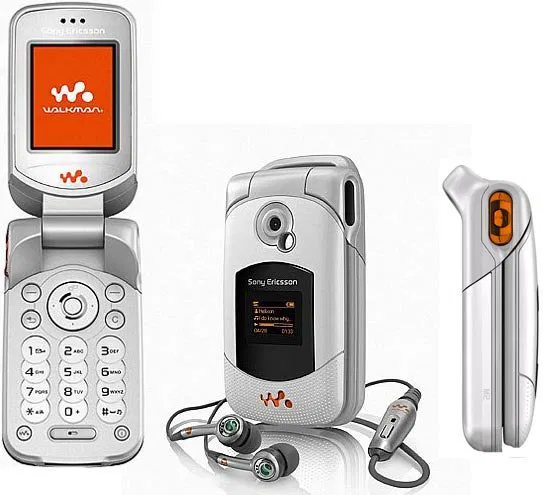
There are only around 3 or 4 phones in this list that I consider to be the perfect devices for the time period and my application and this was one of them. I don’t really consider the NEC between this and the 3200 as one of my devices because of the short time period I owned it, so side by side with the Nokia 3200 getting this device in 2006 was a major upgrade.
Over the 3200 it had Bluetooth, WAP, an excellent loudspeaker, a headphone adapter to take any 3.5mm headphones, memory card expandability, had dedicated media buttons and of course was a clamshell with a secondary screen for notifications and media information when shut.
With this phone I could retire my terrible 128MB AA battery powered MP3 player, it had 256MB of internal storage and could be expanded by a further 2GB. I think I may have had a 1GB card for this. This was a marked point where phones began to consolidate the need for multiple devices into one. Later in the phones life I did get an iPod Nano but this phone still got used for media when a loudspeaker was required. The loudspeaker was particularly good quality compared to other phones of the time, and if I was with friends it was always the W300i that got used to play music as it was clearer and louder than the others.
To date the W300i is my longest serving device, it lasted me a whole 4 years which took the majority of the way through high school. The battery lasted well throughout my ownership, in the absence of social media sharing music, funny videos and pictures took place through Bluetooth so it also took a beating there. The device was very durable, surviving countless drops, bangs and falls onto every imaginable surface. It survived years in the pocket of a very active teenager and never faltered. Until the fateful day it met its demise. I still remember it clearly, it was 2010 and we were in the midst of a very severe winter. We’d had at least 6 inches of snow and I’d just walked a girlfriend home. I was wrapped up well with a down coat, hat and gloves and my phone had just vibrated. I pulled the phone out to check and with the gloves on, fumbled opening it and it fell into the snow while open. Being white and the snow being deep it completely disappeared so was in the snow for a good couple of minutes before I found it. The phone survived initially, I folded it back up and put it back in my pocket. By the time I was home though it had died, the snow that had made its way into the hinges melted and destroyed the phone.
To this day the W300i reminds me of a simpler time. Happy times with friends and the chaotic times of Bluetooth file sharing and hacks, taking over each others devices and generally causing mischief. A time when phones weren’t as important, weren’t as expensive and they didn’t hold the key to our entire lives.
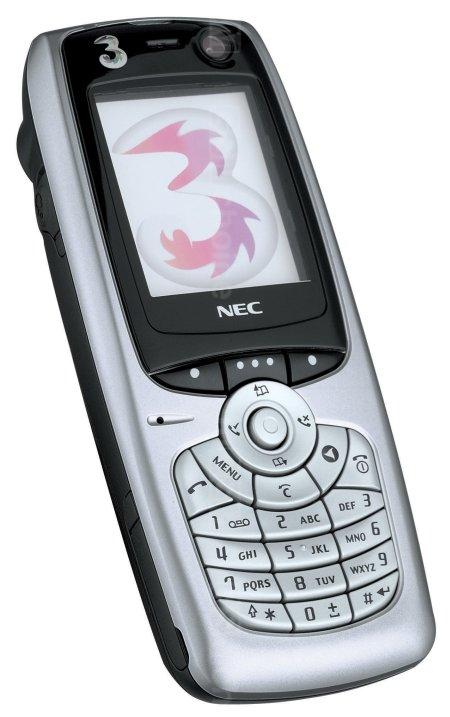
This was a phone I only owned very briefly in 2004. My Father (parents separated) wanted to make sure he could keep in touch with me and that I could call him whenever I wanted (I often ran out of credit on my pay as you go SIM) so he got me this on contract. The reason it didn’t last long with me was that being on contract I was terrified of it running up a massive bill. Ultimately we returned it after a brief period.
Compared to the Nokia 3200 this was a much more advanced phone. For starters it had 3G connectivity, so network speeds were much faster. The screen was a lot bigger and of a higher resolution. I also remember the speaker being much louder and the Polyphonic audio being much better. It also had a front facing camera, not that I ever explored the feature but I imagine it could make video calls.
It was a strange device though. In comparison to other mobiles of the time it was massive, unnecessarily so and felt strangely hollow and light. Similar to the cordless telephones that a few people still have around today. I also remember it consuming battery fast. The Nokia’s I’d become used to could easily go a week between charges with light to moderate use, this one needed charging at best every other day. I assume the early 3G modem was the cause for this.
Overall not a device I was very fond of, partly due to it being a difficult point in my life and the memory of this phone is probably associated with that. However, objectively speaking this was a very advanced device for its time, it took me until around 2010 to get another device that matched the functionality of this one.
The Nokia 3200 was the first phone I owned from new. My timeline is fuzzy going this far back, but the device was released late 2003 so I must’ve got this after around 2 years of using the hand-me-down Nokia 3210. I don’t know if this was a gift or I’d purchased it with my own money, not helped by the fact I can’t find any details online about its original retail price.
By all accounts this was a massive functional upgrade over the 3210 which had been released just 4 years prior to this. It has a colour screen, a camera (albeit basic, however still a big upgrade over nothing!), a GPRS data connection with a rudimentary web browser, polyphonic ringtones, the ability to run Java based applications, infrared connectivity, an FM radio, MMS messaging and a torch.
I have very fond memories of this phone. We didn’t have internet at home at this point, and this had internet access. Unfortunately I was on pay as you go, and data was still very expensive at this point so I had to be very careful how I used it or I would burn through my allowance in no time. I remember being lured into buying poor polyphonic ringtones that mimicked popular songs at the time and java games from various stores online. I can only imagine what a minefield it is today for children to navigate in the world of in app purchases if I was convinced to buy these! I remember using the included headset to listen to the FM radio, and spent a lot of time playing the “Bounce” platformer game that was included with the phone.
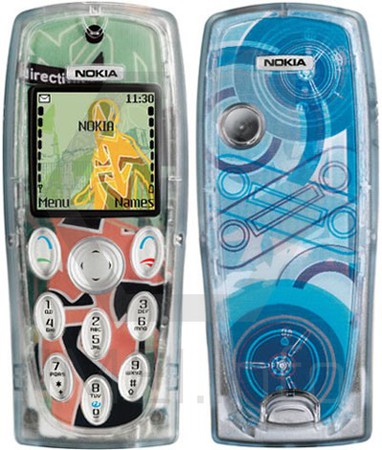
Image credits gsmfind.com
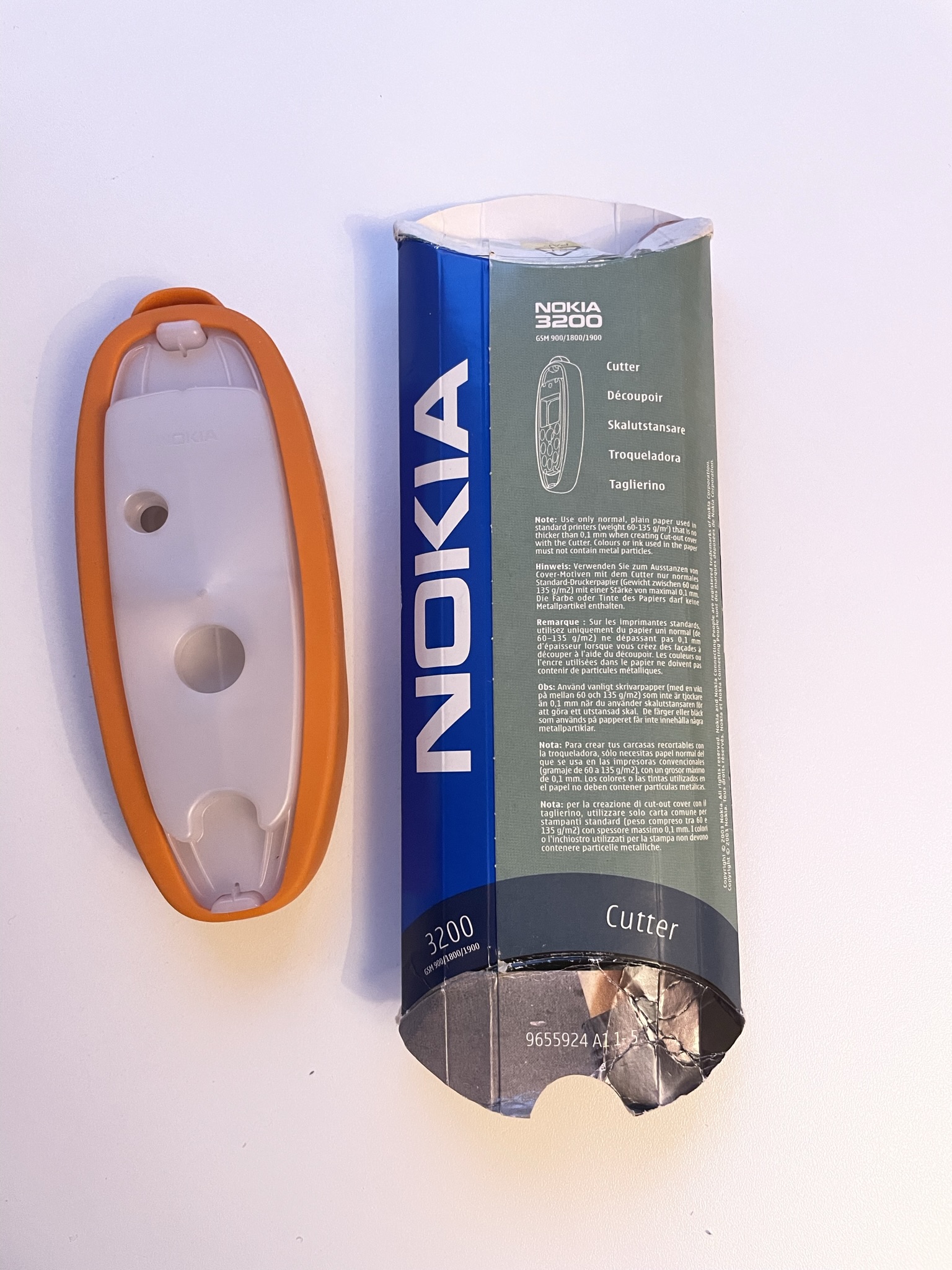
This phones party piece however was it’s customization options. The front and rear panel of the phone unclipped easily and the coloured insert of the phone could be removed and replaced. In the box were 3 holographic insert options; blue, green and orange, my favourite being the blue one. Also included in the box (isn’t it a start contrast how many extras manufacturers used to include, considering now we don’t even get a charging block!) was a paper cutter. You could take any card or paper and make your very own insert for this phone. I remember making inserts from magazines and game covers. I don’t think this level of customization has even been exceeded on a phone before or after this one.
It was not all sunshine though, this phone did have two major drawbacks; it’s size and it’s keypad. The size issue was a common one for the time period, as phones still had very limited media functionality smaller was better. It was a competition of who could have the smallest phone, and while this one was nowhere near the smallest it was still minute by todays standards. The low pixel count and small LCD limited usability, any web page would lose any kind of formatting and layout it was intended to have. The size also exaggerated the issues with they keypad as it was harder to hold. The main issue as mentioned was the keypad. A truly dreadful design that really highlights the downsides to manufacturers trying to be different for the sake of it. If you revisit the image at the top of this page you’ll notice that each physical button has 2 numbers on, they were essentially rocker switches. Combined with the fact these buttons were tiny to start with typing was a horrific experience. You could forget typing with fingers, you had to use your fingernail to stand any chance of accurately inputting. Texting was laborious, and as people in my circle started to text more I found myself reverting back to the 3210 which had full sized buttons.
While I’d love to own this device again just to relive the memories they’re now very hard to come by in complete condition and I think the saying of “Never meet your heroes” rings true here. Especially with large adult male hands I think trying to use this device today, even just playing around with it would tarnish the memory I have of it.
This was my introduction into mobile phones and I hold it in very high regard. At first this phone belonged to my Mother, and I have strong memories of getting hold of it from her whenever I could to play a game of Snake while we waited in a doctors waiting room, or being dragged around department stores.
Once my Mother’s contract had ended she replaced the device, and this was handed down to me, with a o2 pay as you go SIM as my very own first mobile phone. At this point in my life, around 2001 I had very little need for a mobile phone, other than being contactable for my parents when I was playing out and I may have sent a couple of text messages.
This didn’t stop me using this phone and exploring every feature it had. I remember the green backlight and backlit keys, which were very similar to a Casio F91-W’s in colour, and actual usefulness. It had an inbuilt ringtone maker, which you could painstakingly type out a sequence of numbers for different notes, and breaks to create your very own song. I think my proudest ringtone was the 007 theme tune, in all it’s Monophonic glory. Aside from Snake and the ringtone maker this phone was very basic, it didn’t have any type of connectivity aside from calls and text messages.
I remember keeping this device around while I had my next couple of devices, but I can’t work out what actually happened to this phone. I don’t think it was every sold but perhaps it was lost in a later house move or maybe it was passed on to another family member.